Shrinkage represents a critical challenge for retailers today, directly affecting their profitability and operational efficiency. According to a study published by the National Retail Federation, the average number of shoplifting incidents increased by 93% between 2019 and 2023. In response to this trend, advances in intelligent detection provide stores with precise, actionable data, turning security into a genuine performance driver.
Among these solutions, key performance indicators (KPIs) play a central role. They make it possible to analyze activity in detail, detect anomalies, and optimize resource allocation.
When used effectively, KPIs such as the number of alerts per day, per hour, or per camera, global alert maps, heatmaps, and reaction times provide a clear view of vulnerabilities and levers for action to effectively reduce shrinkage, while preserving the customer experience.
📈 Real-time alert monitoring: analysis by day and by hour
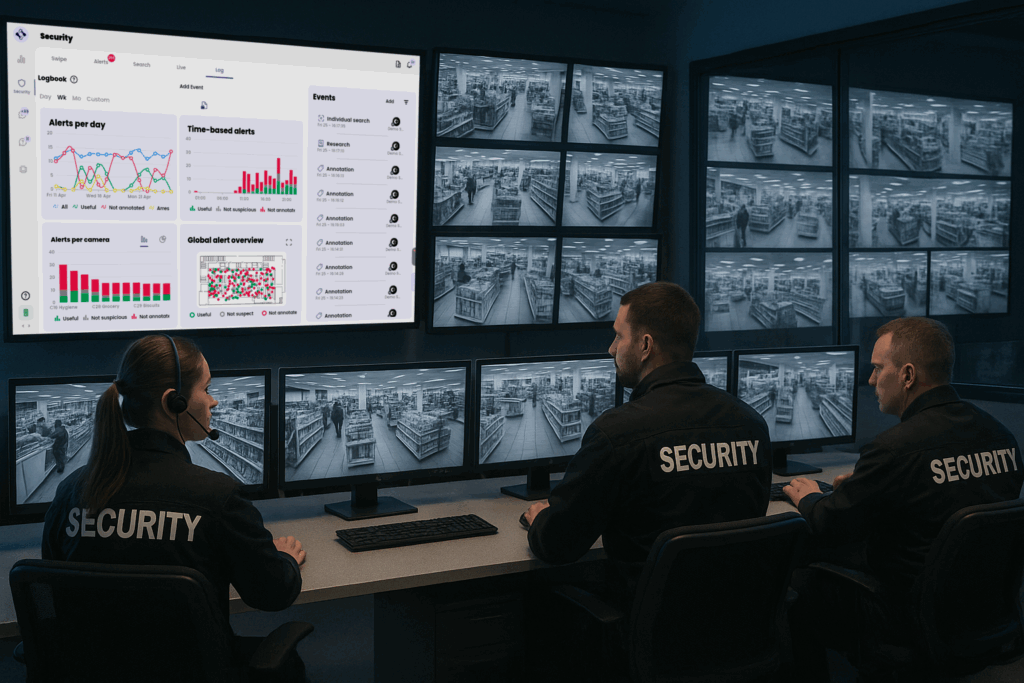
Tracking the number of alerts generated each day and their hourly distribution gives security teams a detailed understanding of in-store dynamics. A spike in alerts at the end of the day or during certain time slots may signal increased vulnerability linked to reduced vigilance or higher footfall.
By analyzing this data, managers can adjust their strategies: strengthen physical presence during critical moments, optimize staff rotation, or reorganize teams to cover sensitive periods. Observation over several weeks also helps identify recurring trends, anticipate activity peaks, and plan human resources accordingly. This approach aligns with the principles of the combination of intelligent security and operational insights, where data directly informs decision-making.
Thus, the alerts-per-day-and-hour KPI becomes a genuine strategic tool, driving continuous improvement in shrinkage prevention.
📷 Alert analysis by camera: identifying high-risk zones
Cameras play a crucial role in any surveillance system, but not all areas of a store carry the same level of risk. This is where Oxania's suspicious behavior analysis comes into play.
By identifying which cameras generate the most useful alerts, security managers can quickly pinpoint areas requiring priority monitoring. A camera showing a high number of alerts may indicate an area prone to theft attempts, a spot with poor visibility for staff, or a flaw in the store layout.
Conversely, a total absence of alerts can also reveal a blind spot in the camera network coverage. Thanks to this analysis, managers can reposition certain equipment, add additional cameras, or strengthen human resources at strategic locations, all while optimizing existing investments. To learn more about the key technologies for detecting theft in stores, it is essential to combine visual intelligence with field data.
🛒 Global alert map: an intelligent overview
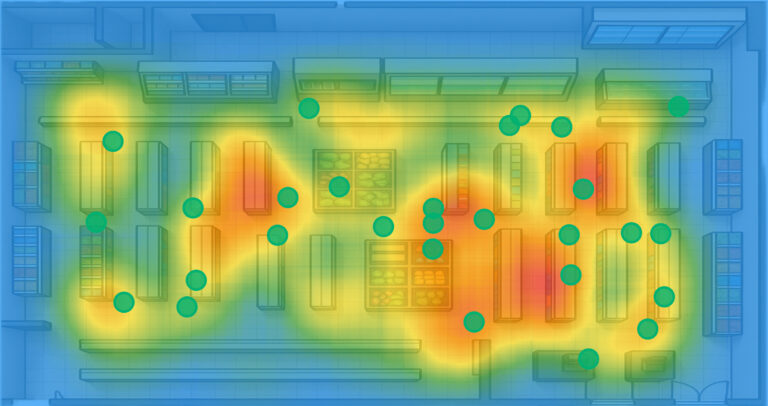
The global alert map is a genuine aid for store security management. By overlaying alert points on a detailed map of the store, managers gain an immediate overview. This type of mapping, recommended by reference organizations such as ECR Retail Loss, helps ground prevention decisions in reliable data.
This visual representation makes it possible to identify red zones requiring increased vigilance, while also understanding the dynamics of suspicious behavior associated with shoplifting. A concentration of alerts near an exit, a sensitive aisle, or a low-visibility area may lead to reconsidering the store layout, repositioning staff, or adjusting certain procedures.
The global map also facilitates internal communication by making information clear, visual, and accessible to everyone. Thanks to this incident heatmap, decisions become faster, more collaborative, and more effective, reducing shrinkage and strengthening the smoothness of daily operations.
🔥 In-store heatmap: visualizing activity for better anticipation
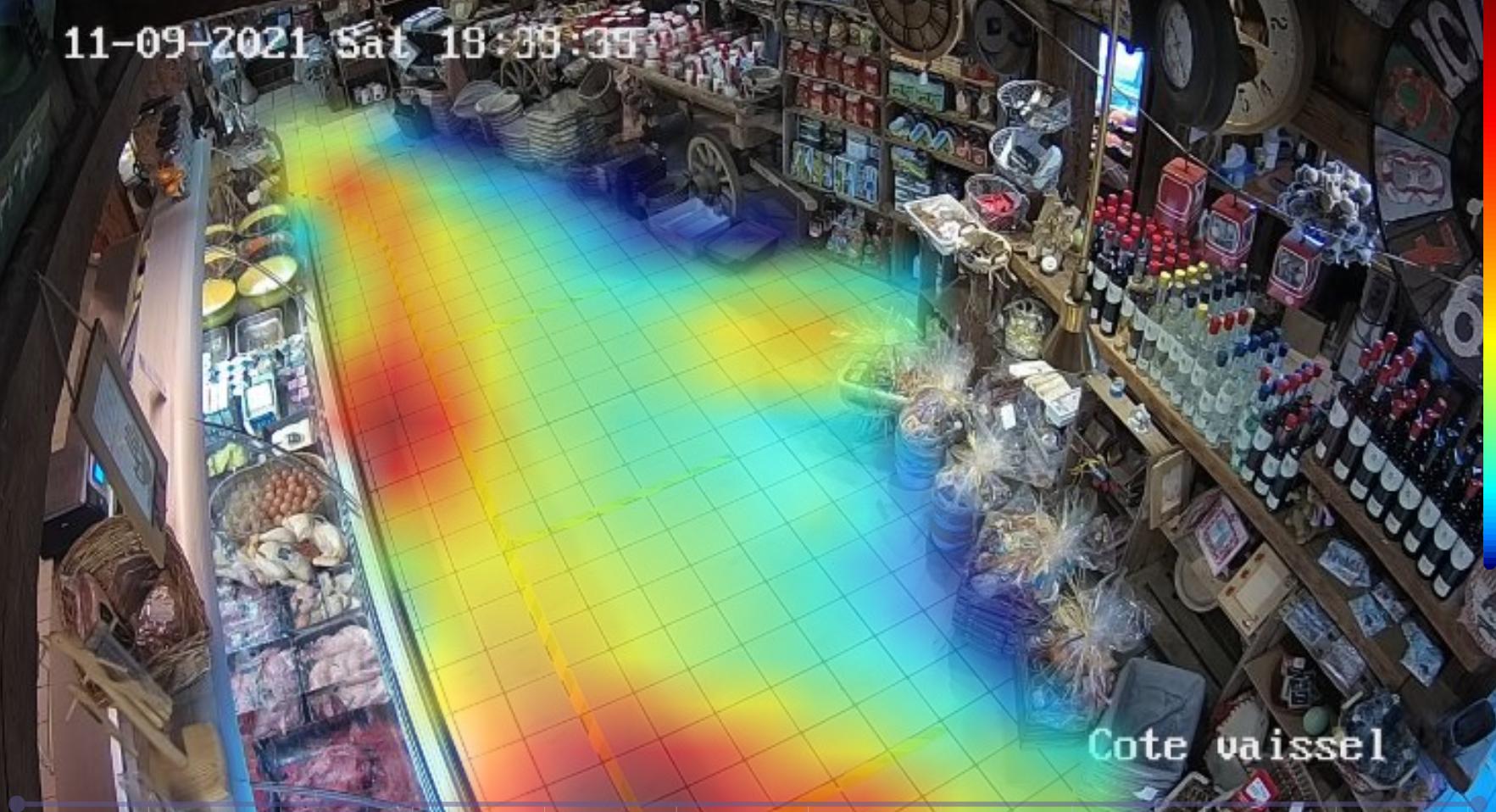
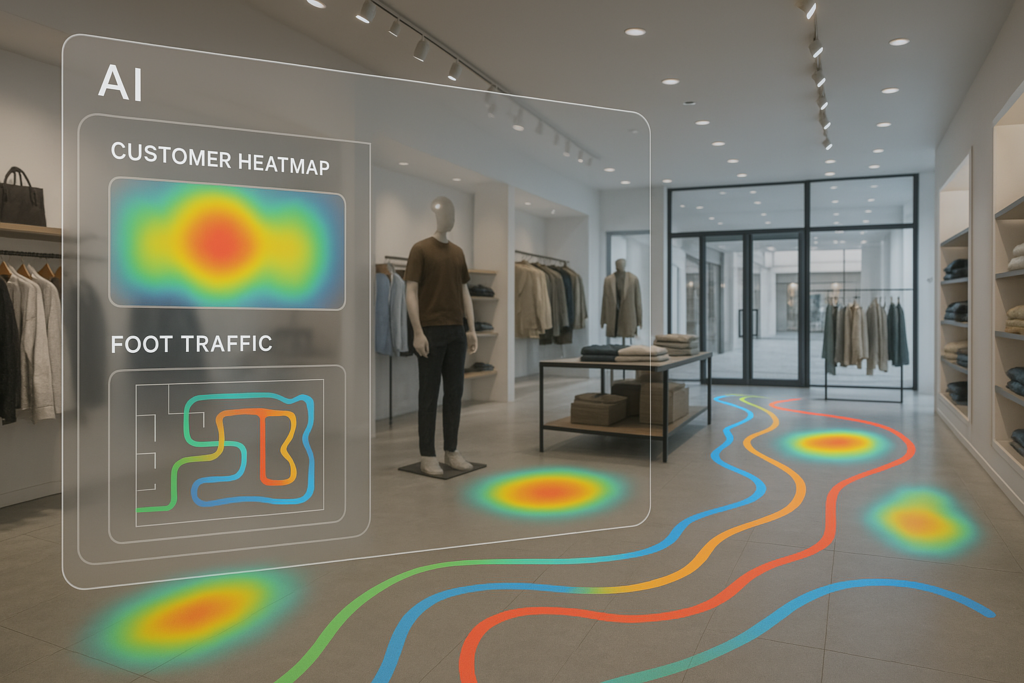
The hot zone heatmap is a valuable tool for further refining the strategy against shrinkage. It provides a visualization of the areas with the most intense activity, based on movements detected by cameras and generated alerts. Combined with features like people counting, the heatmap offers a complete view of customer flow and concentration areas.
This type of analysis goes beyond simply handling incidents to anticipate risks: for example, by noticing that an area is particularly busy but poorly monitored, it becomes possible to strengthen human or technological presence there. Similarly, overly isolated areas can be redesigned with a new layout to limit theft opportunities.
Leveraging heatmaps thus helps build a safer, smoother, and more pleasant shopping environment for customers, aligning business objectives with security requirements.
⏱️ Reaction time: a decisive KPI for in-store security
The reaction time to alerts is a fundamental indicator for measuring the operational efficiency of security teams. A short response time not only means better protection against incidents, but also a reassuring presence for customers and an overall sense of security in the store. As shown by the work of the Loss Prevention Research Council, speed of intervention is a decisive factor in deterring theft.
By precisely tracking these times, it becomes possible to identify bottlenecks in the communication chain or shortcomings in task distribution. This monitoring aligns with the logic of augmented security where AI and agents work together to improve responsiveness. By analyzing average reaction times, managers can streamline staff allocation: avoid redundancies, better cover peak hours, and deploy resources more strategically.
This also makes it possible to optimize costs without compromising the quality of the system, by investing where the need is real, while boosting the motivation and engagement of on-site teams.
🚀 Oxania: KPIs powering intelligent security
In this demanding environment, partnering with an innovative provider is more essential than ever. Thanks to its AI-based intelligent detection solutions, Oxania enables retailers to turn security management into a genuine driver of overall performance. Its high-resolution video analysis, powered by dedicated GPUs, ensures a level of detection accuracy that low-resolution solutions simply cannot match.
By leveraging clear, visual KPIs directly connected to operations, Oxania helps retailers prevent incidents, optimize their teams, and improve the customer experience. Our approach is built around continuous improvement, with tools designed to be simple to use while offering real analytical depth.
By choosing Oxania, retailers strengthen their operational efficiency, reduce shrinkage, and lay the foundations for sustainable, well-managed growth.