A fall weighs all the more heavily when no one sees it
Falls are among the leading causes of accidental death worldwide. The World Health Organization estimates that they caused around 842,000 deaths in 2023, 71% of them among adults aged 60 and over (WHO fact sheet on falls). Behind these figures, one factor shapes the outcome of every accident: the time that passes before someone comes to help.
In a store, a stockroom or a warehouse, that delay often comes down to chance: a customer walking down the aisle, a colleague coming back for a box. A camera that records while no one is looking at the screen changes nothing. This is the delay that AI video analysis helps reduce.
How AI detects a fall
The principle relies on analysing postures, not on identifying people. The model detects a loss of verticality: a silhouette that suddenly goes from standing to a position on the ground. It works on the footage from cameras that are already installed.
- On-site detection. With Oxania, the cameras' main stream is analysed locally, on a dedicated GPU installed in the store, and the video stream stays on site.
- A video alert. A short clip arrives in under 10 seconds on a mobile, tablet or computer, with an automatic zoom on the area concerned.
- A human decision. The person who receives the alert watches the clip and decides what to do next. Someone crouching to grab a product from the bottom of an aisle shelf calls for a different response than a person who stays on the floor.
What the AI detects is the fall itself, whatever its cause: a slip, a misstep or a dizzy spell that makes the person fall all trigger the same alert. A dizzy spell without a fall, however, cannot be seen from posture.
The human decision matters as much as the detection: the technology detects, the team decides. There is no facial recognition and no tracking of a person from one camera to another, as detailed in our article on vision AI that analyses gestures, not people.
In stores: customers and teams
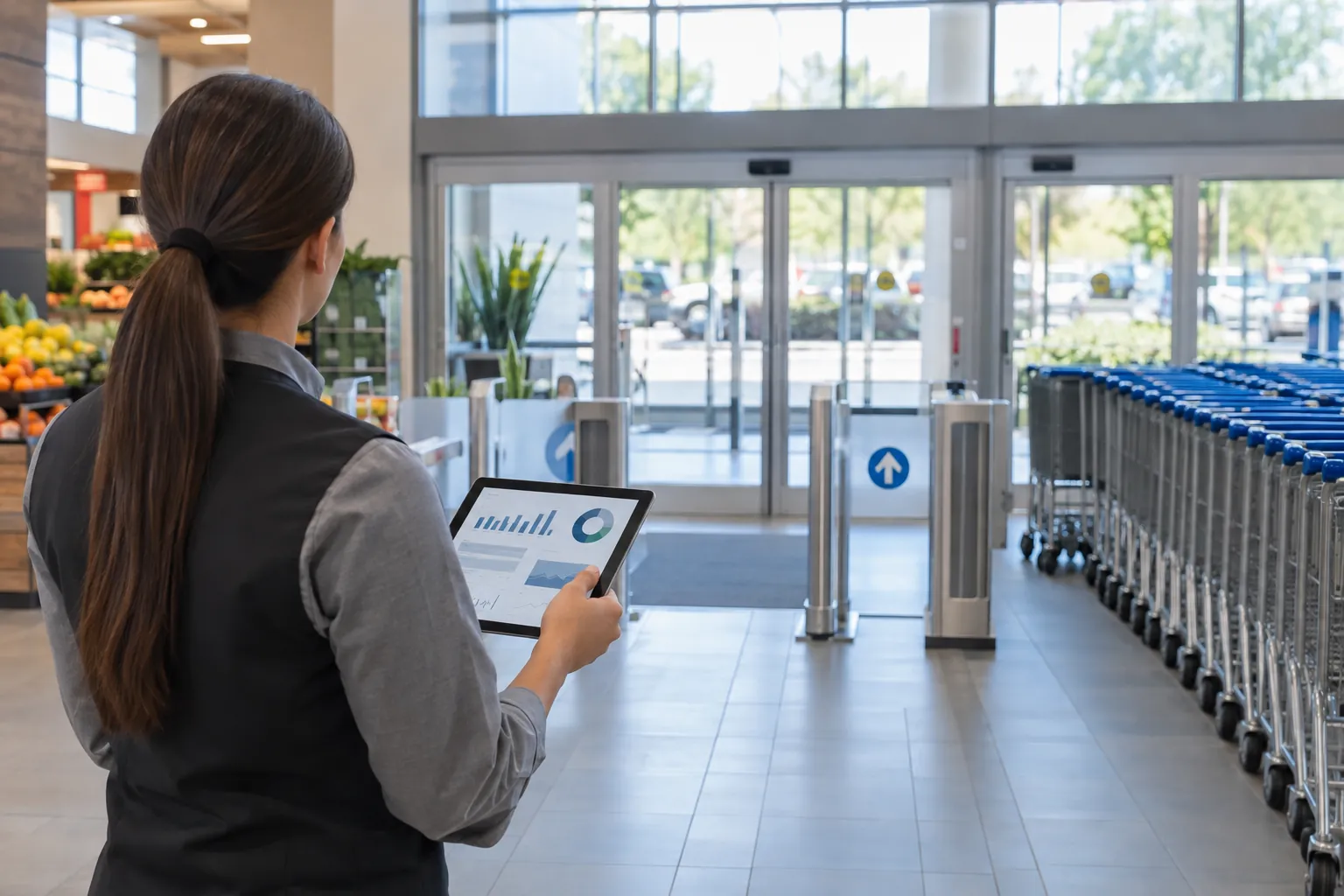
On the sales floor, falls often have mundane causes: a wet floor at the entrance on a rainy day, a spilled product in an aisle, a poorly signposted step. They affect customers of all ages, and above all the oldest, for whom the consequences are the most serious.
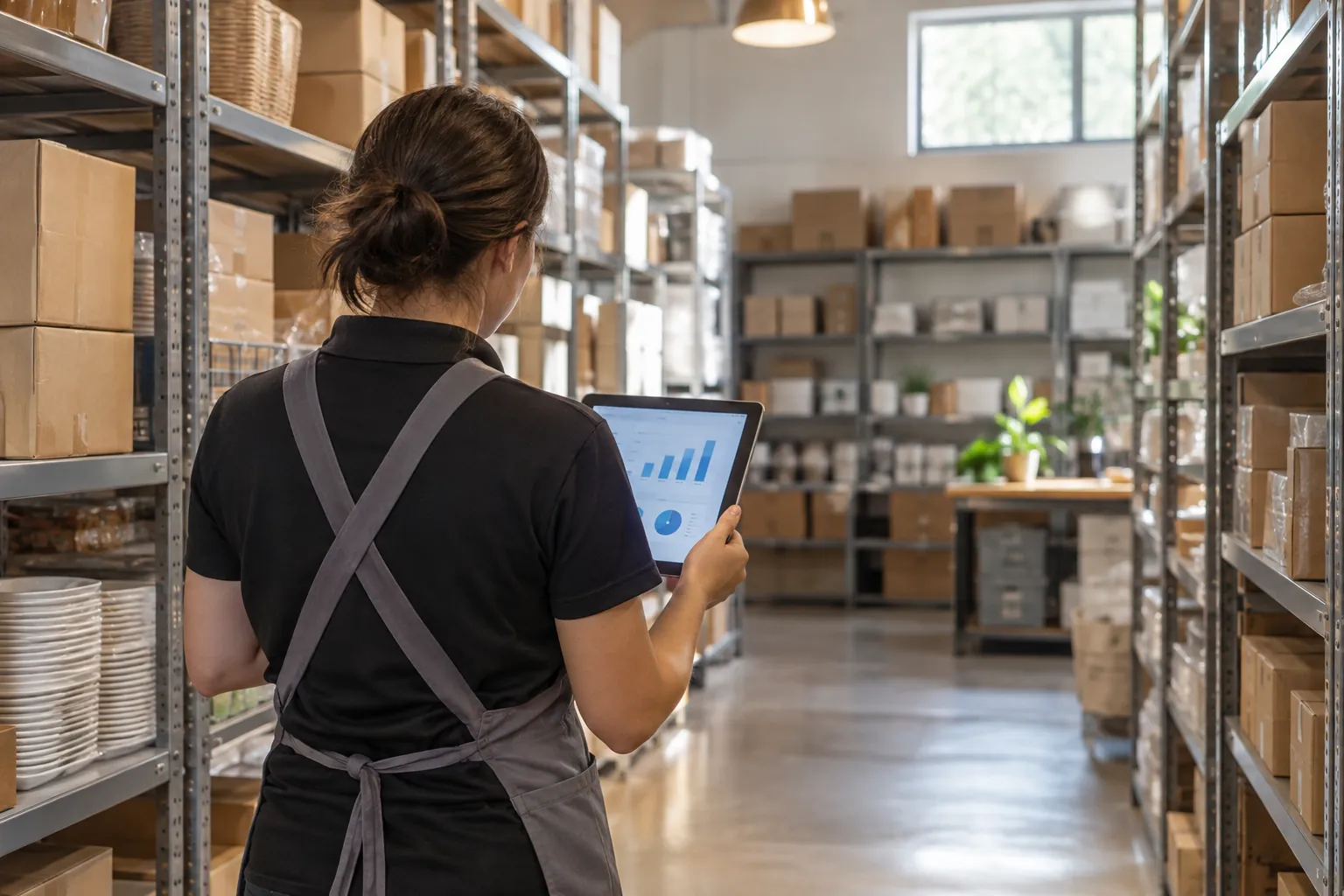
For teams, the risk shifts to the stockroom and quiet hours: stocking high shelves, using a stepladder, handling boxes, opening or closing the store alone. An alert then notifies a colleague or a manager without waiting for someone to happen by.
The response is prepared in advance: who receives the alert depending on the time slot, who goes to the scene, who calls emergency services if needed. The principles are those of any video alert, presented in our guide to building a team response protocol.
Warehouses and logistics sites
Warehouses combine many risk situations: large floor areas, vehicle traffic, work at height, employees sometimes alone in a remote aisle. The International Labour Organization estimates that 395 million workers worldwide suffer non-fatal occupational injuries (estimate published by the ILO).
Loading docks, picking aisles and high storage areas are the first places to cover. In these spaces, a camera sees more ground than a team can walk. The fall alert complements lone worker protection systems where they exist, without replacing them.
Healthcare facilities and places that welcome vulnerable people
Falls primarily affect older people. In the common areas of a healthcare facility or a senior residence (halls, corridors, shared rooms), a rapid alert helps staff step in sooner. Privacy is even more sensitive there: only common areas are suitable, never bedrooms or bathrooms.
What to plan before activating the alert
- Coverage of at-risk areas: entrance, liquid product aisles, stockroom, delivery docks. An audit of camera angles, like the one described for deploying video analysis on existing cameras, shows what the cameras really see.
- The recipients: one or two people per time slot, reachable on a mobile, a tablet or the reception computer.
- Informing the people filmed: signal the presence of cameras and the use of video analysis in accordance with local regulations, and consult staff representatives where the law requires it.
- Retention: only clips linked to an alert are kept, on servers located as close as possible to the customer's country, for a period compliant with local regulations.
The same camera network then serves several purposes: loss prevention, statistics by area and time slot, and people's safety. With Oxania, the fall alert arrives in the same application as the other alerts, with the same zoom and dashboard features. For the team, it is one more alert to learn, not one more tool to learn: our article on in-store fall alerts and the value of a single system details this organisation.