Assessing your store's video surveillance needs
To choose a security camera that is truly suited to your business, it is essential to assess your actual needs. A DIY store will not have the same sensitive areas to cover as a pharmacy or a food retailer. It is therefore important to identify the strategic points to cover: entrances and exits, high-value aisles, checkouts, and storage areas. This preliminary mapping will help you avoid blind spots and ensure complete, consistent coverage. In a context where, according to the National Retail Security Survey, shrinkage accounted for more than $112 billion in losses for the retail sector in 2022, this planning step is more decisive than ever.
It is also crucial to take into account ambient light and environmental constraints, such as exposure to sunlight or dark areas, which can affect image quality. Cameras with infrared sensors or HDR (High Dynamic Range) can offer a significant advantage in these cases. Finally, needs can vary depending on the time of day: some stores also have to protect their goods at night, which requires high-performance night vision. In the face of the rise in shoplifting, a thorough analysis of your needs is the foundation of a truly effective system.
Resolution, field of view and connectivity: the key technical criteria
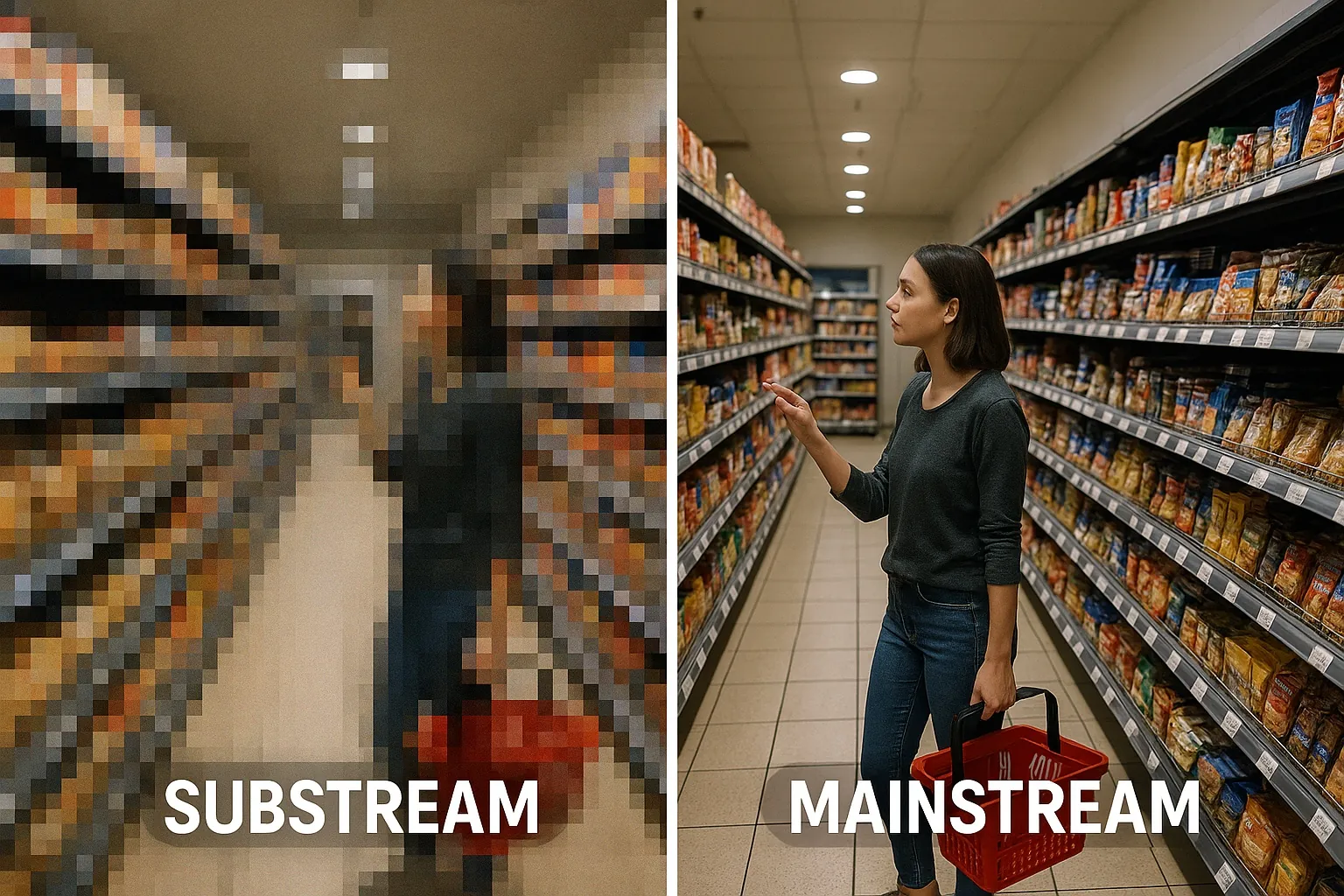
The choice of a camera must also be based on its technical characteristics. Resolution is one of the most important factors: Quad HD resolution (1440p) is now the recommended minimum to clearly distinguish gestures and objects. Some situations may even require 4K to achieve maximum precision over large areas. Likewise, the field of view must be suited to the space to be covered : a camera with a wide-angle lens can cover large areas with fewer devices, thereby reducing installation costs.
Connectivity is also a determining criterion, especially if you want to access live feeds remotely. IP cameras (connected to the network) are increasingly used because they allow centralized, scalable management. One often overlooked point is the required bandwidth: a 1080p camera streaming continuously can consume between 2 and 4 Mbps, a parameter to plan for in the store's network configuration.
By integrating smart features such as gesture analysis, some cameras can become genuine prevention tools in the fight against shrinkage. It is therefore advisable to choose equipment that is compatible with the video analytics software solutions on the market, in order to get more value from your existing setup with an added layer of intelligence.
Security camera installation: why call on a professional?
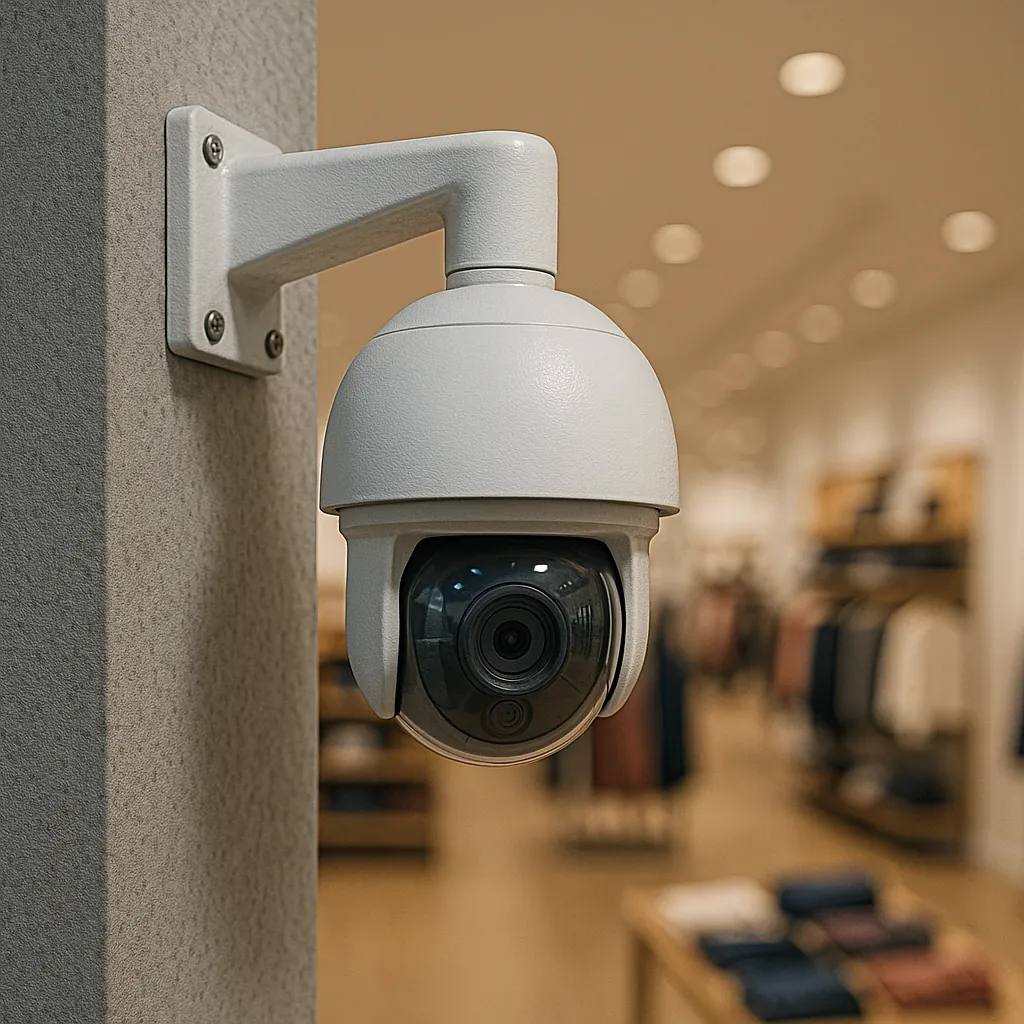
Installing a security camera is not just a matter of fixing it to the wall. A professional will know how to choose the ideal locations to maximize the system's effectiveness, taking into account height, viewing angle, lighting and access constraints. A poorly positioned camera can compromise your entire security strategy, or even create undetected blind spots. An installer also ensures that the system complies with electrical and network requirements, which is fundamental to guaranteeing the reliability of video feeds.
Using a professional also helps avoid configuration errors that could harm the performance of alerts. For example, poorly configured motion sensitivity can lead to repeated false alerts, needlessly mobilizing teams on the shop floor.
The role of specialized integrators is decisive here. Solutions like Oxania take an integrator-oriented approach, working directly with video surveillance and loss prevention professionals to ensure optimal compatibility between the installed hardware and the analytics software layers. This partnership guarantees not only performance at a given moment, but also better scalability of the system over the long term.
Cameras and artificial intelligence: the contribution of video analytics systems
Cameras no longer simply capture images. Today, they can become powerful decision-making tools thanks to artificial intelligence. Video analytics solutions can detect at-risk gestures, without the need for an operator watching every screen at all times. As the Loss Prevention Research Council points out, integrating AI into retail security systems is one of the most promising areas of research for reducing losses. This not only improves efficiency, but also reduces the human resources tied up in front of screens.
An intelligent system can alert managers in real time when an at-risk gesture is detected: concealment of a product, opening of packaging, consumption in the aisle. With a solution like Oxania, this alert is sent automatically in under 10 seconds, with no human intervention, enabling an almost immediate response from the in-store team. However, humans remain the sole decision-makers: it is the store staff who decide what action to take after each alert.
These systems are also able to adapt to the context, learn over time and provide enriched analysis of in-store traffic. For a retailer, this is an opportunity to protect their goods while optimizing space management and the customer experience.
In-store video surveillance: investing in a scalable solution
Choosing a security camera also means thinking long term. A good system must not only meet current needs, but also be able to evolve with future security requirements, technology updates and changes in the store layout. The global security camera market is growing by about 10% per year, which reflects the rapid evolution of available technologies. Favoring technologies compatible with advanced software modules guarantees a better return on investment over the long term.
Retailers who invest in scalable solutions, capable of integrating layers of artificial intelligence and video analytics, make sure they are not left behind technologically, while keeping tight control over their investments. This proactive prevention approach limits losses, strengthens team safety and improves day-to-day management.
In conclusion, choosing your security camera and associated technologies well means combining technical performance, expert installation and a long-term strategy. By combining these elements, you will turn your video surveillance system into a genuine performance lever for your store.