In a single trolley at a large DIY store, you'll find a cordless drill, a bag of cement and a packet of wall plugs. The shelving rises high, the range is huge, and no other store format mixes sizes and values so widely.
This setup produces a particular kind of shrinkage. Losses hide less in the flagship items than in the corners, the small formats and the outdoor areas. Rather than adding yet another list of the most stolen products, this article reads the store like a map: the product families and zones where losses concentrate first, then the indicators that let you take action without locking down the entire store.
Why the DIY store is a special case
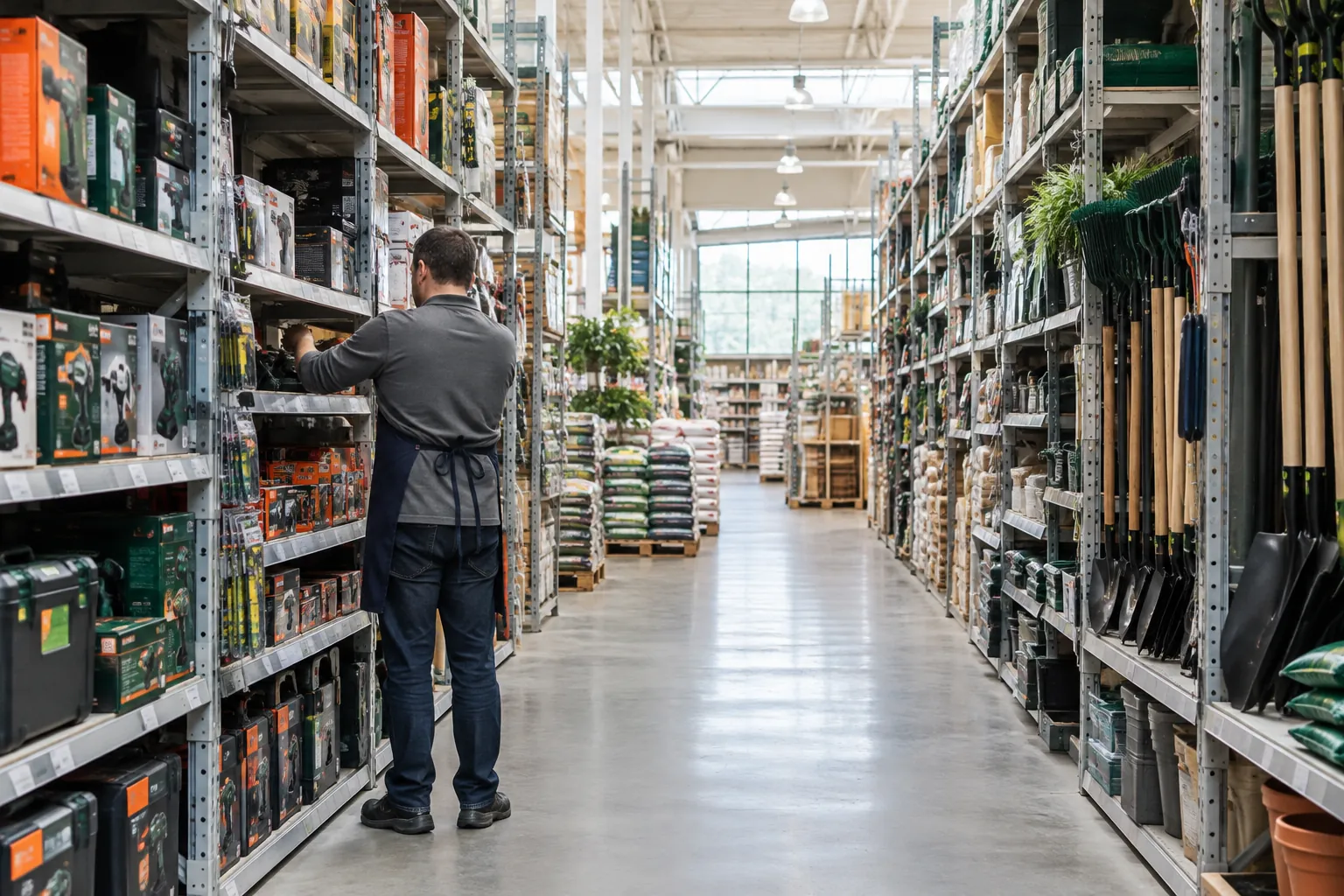
First, there is the floor area and the height. Tall shelving and long aisles break up lines of sight: a sales assistant busy in the plumbing aisle can't see anything happening two aisles away. Your teams can't be everywhere, and the layout of the store reminds them of that every day.
The ratio of value to volume also plays a part. A set of drill bits or a lithium battery fits in a pocket and is sometimes worth more than an item ten times bulkier. Conversely, some bulky products leave the store on a flatbed trolley, mixed in with paid-for goods.
Then there is the packaging. Blister packs, shells and cartons are designed for transport and shelf display, not for protection. A few seconds are enough to take only the contents, and the empty carton ends up behind a paint tin or at the bottom of a bin.
Finally, the customer base is a mix of individuals and tradespeople, who often move around with a backpack, a toolbox or an already loaded trolley. There is nothing unusual about that, but it blurs the reading of what is happening in the aisle.
Four product families, four different risks
Not all items expose the store in the same way. Grouping the range into families lets you choose a response suited to each one, instead of applying the same one everywhere.
- Power tools and batteries. High value and easy resale, especially for batteries and chargers compatible with a whole range of machines. This is where retailers have invested the most: locked display units, demo products on the shelf, collection at the counter.
- Tool consumables. Drill bits, bits, saw blades, cutting discs: small, expensive by the gram, and rarely protected individually. They are often the first items found in opened packaging.
- Hardware and small supplies. Padlocks, locks, fasteners, plumbing and electrical fittings, tape measures. Each loss is small, but they add up, and part of it comes from receiving or counting errors rather than theft.
- Garden and outdoor. Secateurs, small hand tools, watering fittings, seasonal products. The risk follows the calendar and is concentrated in outdoor spaces where staff pass less often.
This family-by-family view echoes our guide to the most stolen products in stores, with one important nuance: in DIY, the location of an item often matters as much as the item itself.
The zones where losses concentrate
When you map these families onto the store plan, the same zones stand out in most large DIY stores:
- The consumables and hardware aisles, long and dense, where packaging gets opened out of sight of the teams.
- The ends of aisles and the high-storage aisles, rarely visited on weekdays, which also serve as hiding places for empty packaging.
- The garden area and outdoor zones, with their own access points and fewer staff out of season.
- The building materials yard and loading access points, where flatbed trolleys and vehicles cross paths, and where it becomes hard to tell paid-for goods from unpaid ones.
- The area around the customer service desk, where returns and exchanges are handled, another classic source of inventory discrepancies.
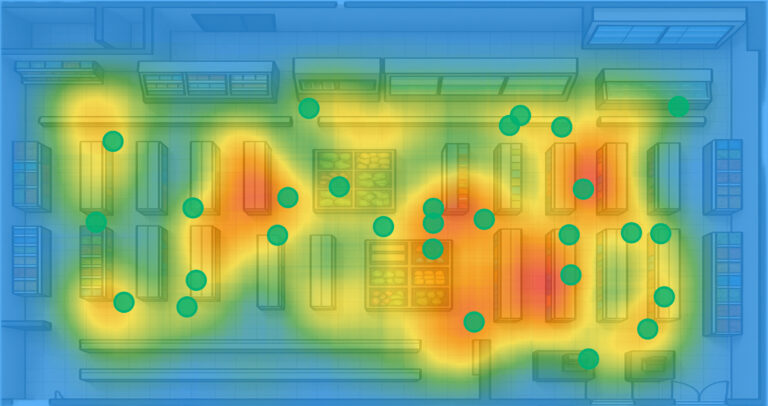
Each store nevertheless has its own map. Layout, lighting, the position of existing cameras, staff schedules: if just one of these parameters changes, the hot spots move. It is therefore better to measure them than to assume them.
Empty packaging, an underused indicator
In DIY, abandoned packaging is often the only trace of a theft. It is also a piece of data, provided you record it. The American trade magazine Hardware Retailing describes the empty packaging map used by the retailer Wilco: teams log every piece of packaging found and every theft observed, then place a red dot on the store plan. After a few weeks, the dots form clusters. You can then see where to focus attention and which items deserve extra protection.
The method costs almost nothing. To make it last beyond the first month, a few rules help:
- note the aisle, the product family, the date and the time slot of the discovery;
- distinguish packaging that was found from a theft that was observed, as they don't tell the same story;
- review the data every week with the department managers, without waiting for the annual inventory;
- cross-check the map against rolling inventories to isolate the share due to administrative errors.
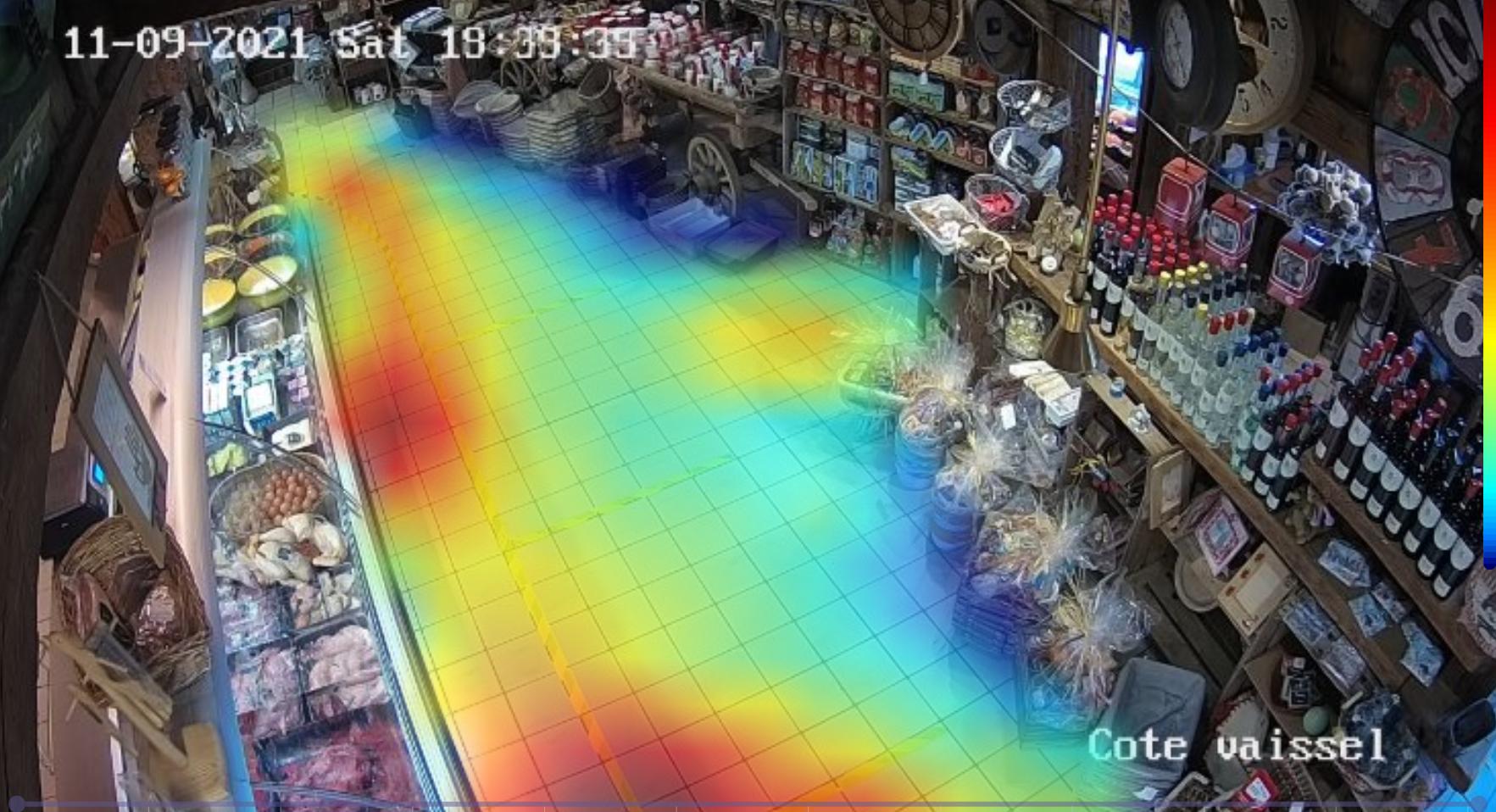
Its limit is well known: empty packaging tells you where and what, rarely when. It is discovered hours, sometimes days after the fact. This is the delay that real-time video analysis can reduce. To go further, see our article on the at-risk gesture heatmap.
Reducing shrinkage without locking down the store
DIY retailers know the classic countermeasures. The whole difficulty lies in dosing them: an aisle entirely behind glass forces the customer to wait for a sales assistant, and some end up buying elsewhere.
Hardware Retailing lists several field practices in a feature on shrinkage in DIY stores. It includes simple measures: placing the most exposed items behind the counter or within view of the teams, displaying only one power tool on the shelf and keeping the stock in the back room, and escorting products taken from a locked cabinet to the checkout. Others concern organisation: greeting each customer on arrival and, against internal shrinkage, limiting the people responsible for taking out the rubbish and using transparent bin bags.
Video complements these measures, provided someone makes use of it. In a large store, nobody watches dozens of screens continuously. A video analysis solution such as Oxania for DIY stores relies on existing cameras to spot at-risk gestures, for example opening a package, concealing an item or putting it into a personal bag, and sends a video alert in under 10 seconds to a mobile, tablet or computer. The technology detects, the team decides what happens next: offering help in the aisle, checking an item, or simply noting the time slot.
In DIY, this speed matters a great deal, because the nearest team member may be several aisles away. It does not replace aisle layout, nor human presence. It gives them information at the moment it is still useful.
Measure before and after each action
The American figures show that these efforts eventually pay off. In its 2026 study conducted with the Loss Prevention Research Council, the National Retail Federation reports that the American retailers surveyed recorded 12.4% fewer shoplifting incidents in 2025 than in 2024, a decline attributed to investments in technology and team training. The same study notes that 63% of retailers report fewer than half of the thefts that occur in stores to the authorities. A large share of losses therefore only shows up in internal data.
For a DIY store, the consequence is concrete. Before moving a display unit or equipping an aisle, record over several weeks the empty packaging, the inventory discrepancies by family and, if you have video analysis, the statistics by zone and time slot. Repeat the same measurement after the change. Our article on the key indicators of shrinkage details the KPIs that are useful for this tracking.
A large DIY store doesn't need to protect everything. What it needs above all is to know where its losses go, at what time and in which aisles. Once this map is drawn up, the locked cabinet, the sales assistant posted in an aisle or the video alert become reasoned choices, and no longer costly reflexes applied everywhere.