At a time when losses due to theft weigh heavily on the profitability of retail chains (the NRF recorded a 93% increase in shoplifting incidents between 2019 and 2023), it is essential to adopt security solutions that are preventive, intelligent and predictive. For a long time, security gates were the main safeguard against unauthorized removal of merchandise from the store. But in the face of the continued rise in shoplifting, artificial intelligence brings a new dimension to loss prevention.
Security gates: reactive but limited protection
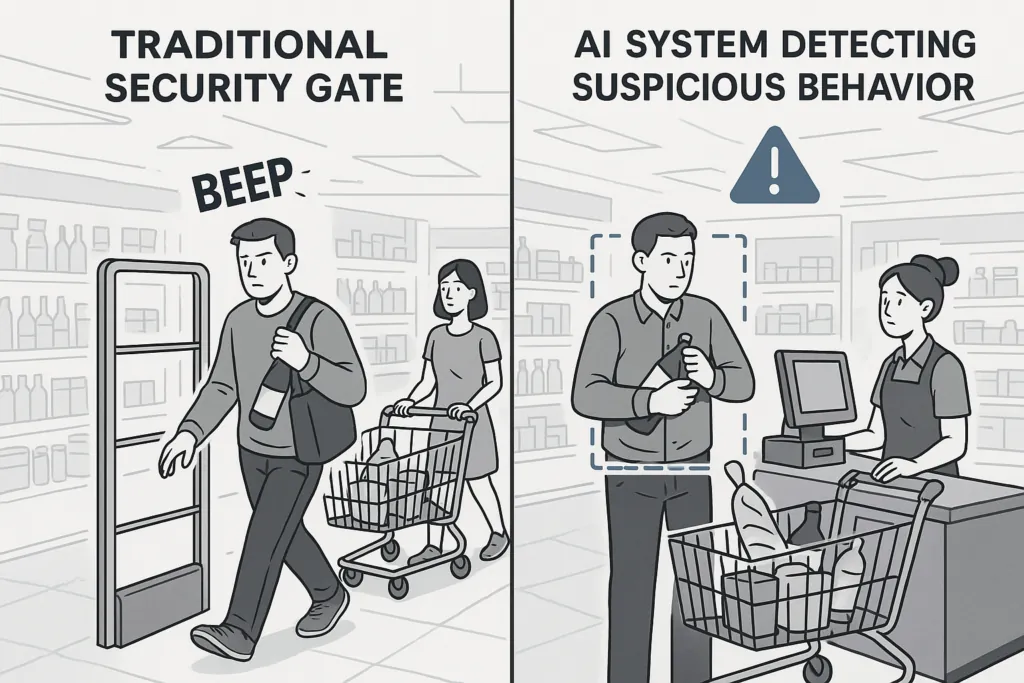
Security gates (EAS) play an important role: they detect items that have not been deactivated or that have been stolen at the moment of exit. They are visible, easy for customers to understand, and act as an effective deterrent. However, their effectiveness depends on tags or anti-theft devices being correctly placed, and they only come into play at the end of the customer journey, once the theft has already taken place.
In other words, security gates are useful but act as a last resort. They cannot detect at-risk gestures beforehand or prevent losses inside the store. Moreover, false alerts generated by security gates regularly tie up staff, reducing their ability to focus on real threats.
AI: proactive detection of at-risk gestures in store
Artificial intelligence, and in particular video-assisted detection of at-risk gestures, enables a radically different approach. Thanks to real-time analysis algorithms, AI can identify at-risk gestures (such as concealing an item, opening packaging or consuming a product in the aisle) well before the customer reaches the exit. According to Security Info Watch, 78% of retail chains already use AI to trigger in-store security events.
This type of technology, such as the one offered by Oxania, offers several advantages:
- Upstream prevention : at-risk gestures are flagged before the customer reaches the exit.
- Fewer unnecessary interventions : AI reduces false alerts by focusing on meaningful gestures, with automatic progressive zoom on the point of interest to see the essentials at a glance.
- Customer experience preserved : the technology is non-intrusive and does not disrupt the shopping journey.
- Advanced analytics : beyond detection, features such as people counting and heatmaps make it possible to continuously optimize security setups.
Security gates and AI: a complementary approach for 360° protection
Rather than choosing between security gates and AI, retail chains have everything to gain by combining the two solutions. AI acts as an at-risk gesture radar inside the store, capable of flagging at-risk situations in real time, while security gates provide a last line of defense at the exit.
Together, they form a complete and coherent strategy:
- In a supermarket, AI can detect an at-risk gesture in the aisles, while the security gate validates the exit.
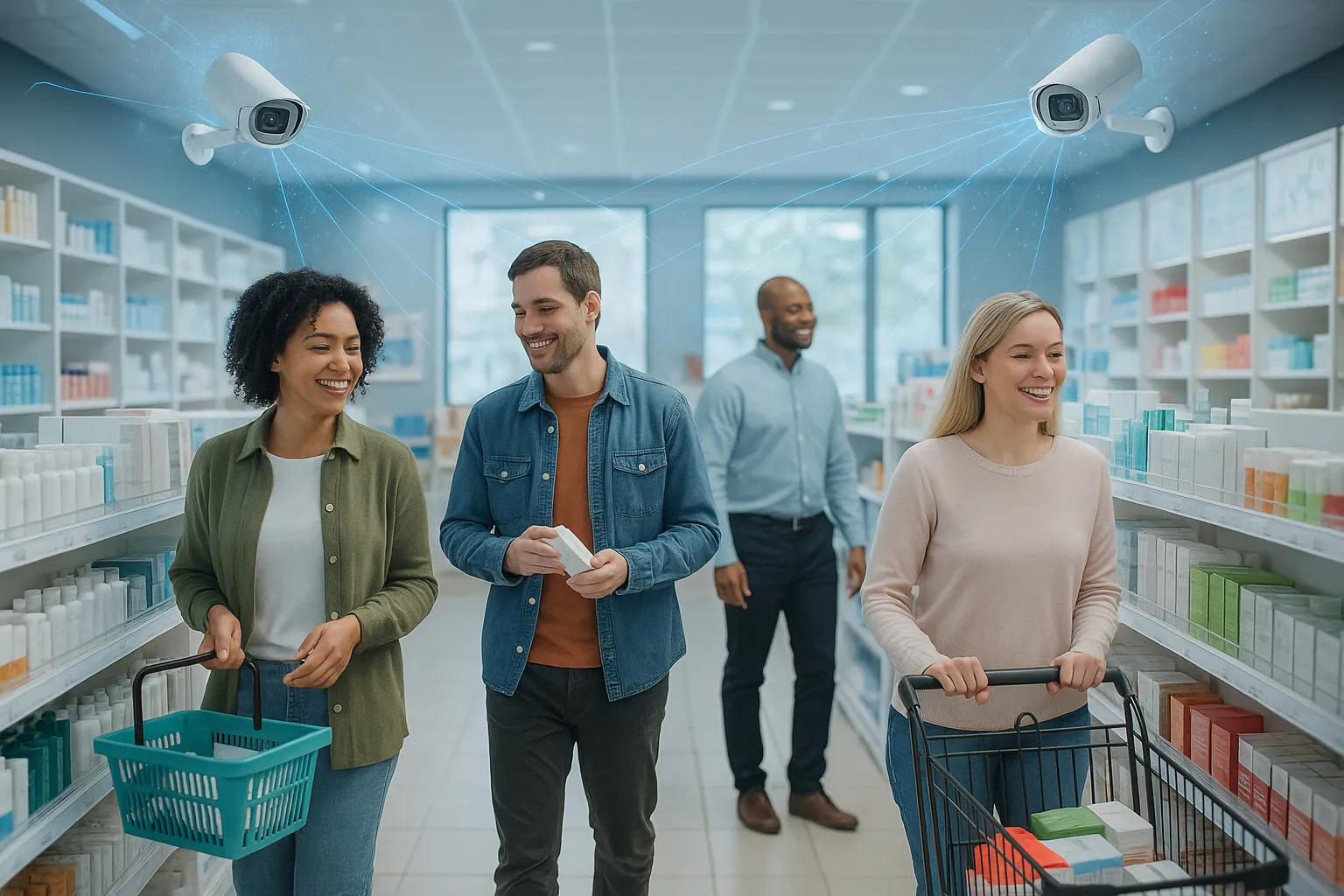
- In a pharmacy, AI covers sensitive areas, notably the most frequently stolen products in pharmacies such as cosmetics and medicines, where security gates can do nothing.
- In a DIY store, AI analyzes gestures in high-value aisles, while security gates screen items fitted with RFID tags.
Conclusion: toward intelligent and predictive in-store security
Security gates have proven their worth, but the future of in-store security relies on an intelligent, anticipative and complementary approach. Integrating AI enables retail chains to significantly reduce losses, while delivering a smooth and respectful customer experience.
Oxania supports retail chains in this transition toward enhanced security, combining the power of artificial intelligence with existing systems. A modern, balanced and effective vision to meet tomorrow's challenges.